
Every nomad forum has this thread. It shows up in Reddit, in Facebook groups, in WhatsApp chats between people who are two weeks away from their lease ending and need to make a decision. Cape Town, Lisbon, or Bali. Someone will recommend all three. Someone else will have strong feelings. Nobody will quite agree.
We’re going to give you our honest take – and yes, we’re based in Cape Town, so take that for what it is. But we’ve also hosted nomads from Germany, the Netherlands, the UK, Brazil, and everywhere in between, and we’ve had enough of these conversations at our kitchen table to know what actually matters once you’re on the ground.
Here’s a real breakdown, category by category.
Cost of Living: Who Wins on Value?
Bali is the cheapest. Cape Town punches well above its price point. Lisbon has gotten expensive.
Bali remains the budget leader – you can live well in Canggu for €1,200–1,600 per month if you’re careful. But “cheap” comes with caveats: eating out every meal (cooking in your own space is harder than it sounds), inconsistent infrastructure costs, and the fact that once you’re in the Canggu nomad bubble, you’re spending more than you planned.
Lisbon has changed dramatically in the last four years. What used to be Europe’s bargain capital now runs €2,000–3,000+ per month for a decent setup, and short-term accommodation is genuinely difficult to find at reasonable prices. The EU infrastructure and quality of life is real – but you’re paying for it.
Cape Town sits in an interesting middle position. The rand has weakened consistently against the euro, which means European nomads are getting real value right now. A good private room, reliable food, transport, and a social life runs €1,400–2,000 per month depending on your choices. At Surfers Lodge, long-stay rates are built for people who want to stay a month or more – and that changes the maths significantly compared to paying nightly rates.
Winner: Bali on pure price. Cape Town on value per experience.
Internet & Infrastructure: Can You Actually Work?
Cape Town is better than its reputation. Bali is improving. Lisbon is solid.
Cape Town: Fibre is widely available and fast – 100Mbps+ is standard in well-equipped lodges and apartments. Load shedding has improved substantially in recent years. At Surfers Lodge, we run backup power so your workday doesn’t depend on the grid. Mobile data (Vodacom, MTN) is reliable and relatively cheap as a backup.
Lisbon: Excellent and boring in the best way. Portugal has some of the fastest average internet speeds in Europe. Infrastructure just works. No complaints, no drama.
Bali: Canggu and Seminyak coworking spaces are genuinely good – fast fibre, reliable power backup. Step outside the main nomad zones, though, and it gets patchy. The infrastructure is improving year on year, but it’s still inconsistent depending on exactly where you’re staying.
Winner: Lisbon on reliability. Cape Town close second if you’re in the right accommodation.
Time Zone: Who’s Easy to Work With Across Europe?
Cape Town is the clear winner for European client-facing work.
This one matters more than people give it credit for. If you work with clients or teammates in Germany, the Netherlands, the UK, or anywhere in the EU, your time zone is your quality of life.
Cape Town runs GMT+2 – the same as most of central Europe in winter, and just one hour behind in summer. Your 9am standup in Amsterdam is your 9am standup in Cape Town too. You can take calls at normal hours, respond to messages without staying up late, and actually have a work day that ends before sunset.
Lisbon is GMT+1, essentially the same – also excellent for European work.
Bali is GMT+8. That’s a seven to eight hour difference from central Europe, which means your European 9am meeting is your 4–5pm. It works for some people – evening calls, morning free time. But if you have regular sync meetings or client calls, it’s a real structural challenge that becomes exhausting over weeks.
Winner: Cape Town and Lisbon (tied). Bali is genuinely difficult for European client work.
Surf & Outdoor Life: Beyond the Laptop
Cape Town offers more variety than either destination. Bali is the surf dream. Lisbon is underrated.
Bali is the obvious one. Uluwatu, Padang Padang, Canggu – world-class waves, warm water, and a culture built around surfing. For intermediate-to-advanced surfers, Bali is hard to argue with. For beginners, Kuta and Seminyak have gentle beach breaks. The catch: the good breaks are crowded. The coworking spaces near the good breaks are crowded too.
Lisbon has access to genuinely excellent surf along the Cascais and Ericeira coast – Ericeira is a World Surf Reserve. Peniche is an hour north. The surf culture is real and the Atlantic can deliver proper swell. It’s not what Lisbon is famous for, but it’s there.
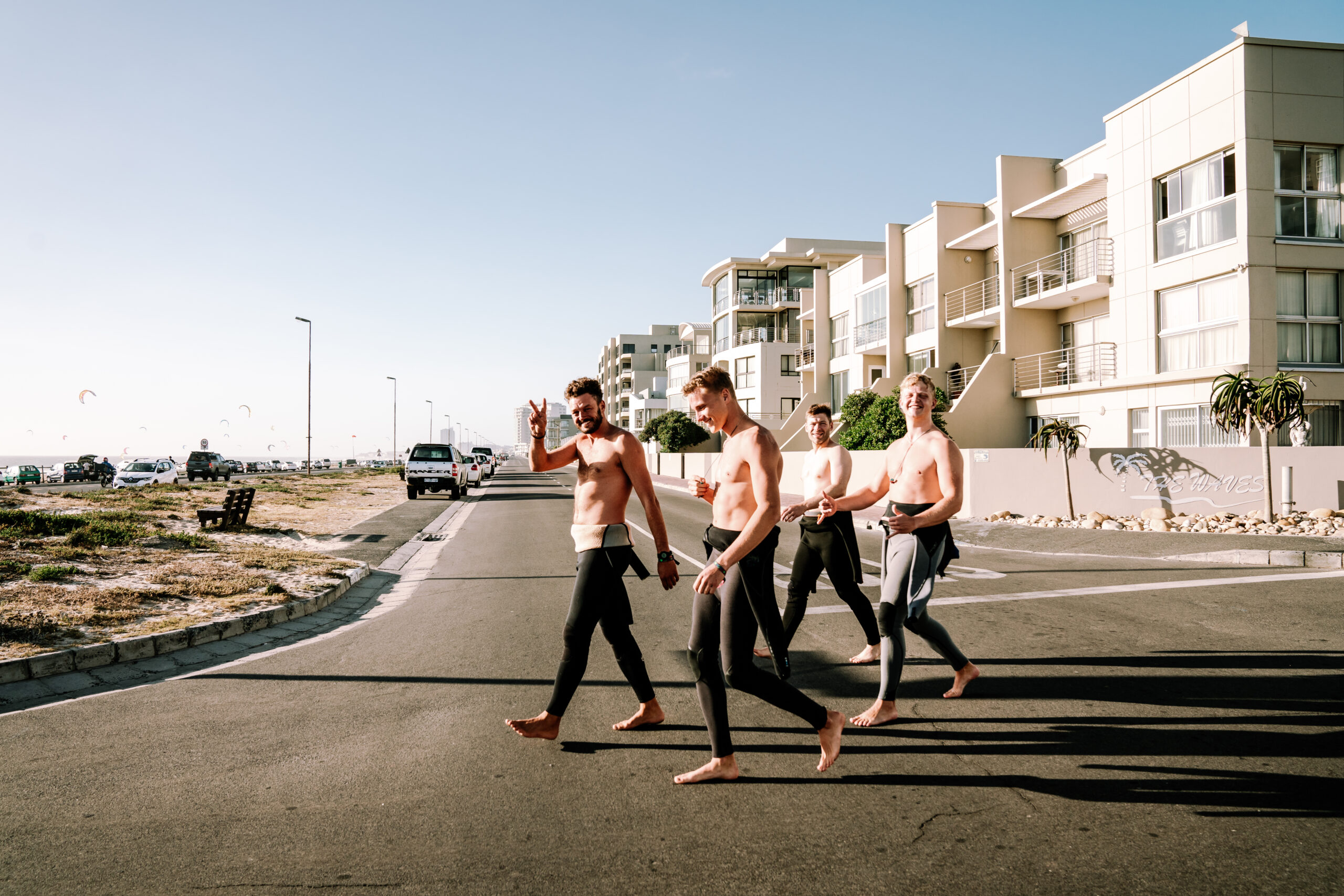
Cape Town is the wildcard. Blouberg beach break for beginners and intermediates, Muizenberg for longboarders, Kommetjie and Dungeons for the experienced end of the spectrum. Beyond surf, you’ve got Table Mountain in your back yard, whale watching from June, wine country an hour’s drive away, and some of the best hiking on the continent.
Winner: Bali for surf-obsessed intermediates and advanced riders. Cape Town for total outdoor lifestyle.
Visa: The Honest Truth
None of these are perfect, and visa situations change – always check current requirements before booking a flight.
Bali: Indonesia’s digital nomad visa gives extended stay options with the right paperwork. Many nomads still manage through visa runs, which is a grind over time.
Lisbon / Portugal: The D8 digital nomad visa is established and one of the better-designed options in Europe – longer stays, clear requirements, renewable. If you’re planning 6+ months, it’s worth looking into seriously.
Cape Town: South Africa allows 90 days on arrival for most European passport holders – no application, no fee, just show up. For a 1–3 month stint, it requires zero bureaucracy. Extensions and longer-stay options exist but require more planning.
Winner: Lisbon for long-term legal clarity. Cape Town for zero-friction short stays.
Community & Social Life
Cape Town’s nomad community is real, tight, and genuinely good. Bali’s is larger but can feel transactional. Lisbon’s is excellent but expensive to participate in.
In Cape Town, the nomad community is small enough that you actually get to know people. At Surfers Lodge specifically, guests stay longer than at most hostels – a week, two weeks, a month – and the result is the kind of connection that doesn’t happen when everyone’s doing a 2-night stopover. We’ve watched people arrive alone and leave with a group chat full of people they’re still talking to two years later.
Bali’s Canggu scene is well-documented – huge, busy, and easy to drop into. The events are good, the coworking spaces have mixers, the options are there. The flip side is that the volume can make it feel surface-level. When everyone’s there, it’s easy to be around a lot of people without actually knowing any of them.
Lisbon has a strong nomad scene anchored by a genuine city with real culture beyond the nomad bubble. The Portuguese are warm hosts and the city has depth. Cost is the limiting factor – socialising in Lisbon requires a budget that rules it out for some.
Winner: Cape Town for depth. Bali for volume. Lisbon for city culture.
The Verdict
There’s no objectively right answer here, but there are better answers depending on who you are.
Choose Cape Town if you’re European, you work with European clients, you want surf + outdoor life + real community, and you want genuine value without sacrificing quality. The rand-euro exchange rate is doing you a serious favour right now. Come for a month, stay for three.
Choose Lisbon if you want EU infrastructure, you’re planning a longer European stay with legal clarity, and you have the budget. It’s excellent – just no longer the cheap option it once was.
Choose Bali if you’re an intermediate-to-advanced surfer, you work primarily with North American or Asian clients, and warm water is non-negotiable. Know that the time zone is a real trade-off for European work.
If you’re already planning a Cape Town trip and want to understand what a month at Surfers Lodge actually looks like, head to our Surfers Lodge page – or send us a message. We’ve had this conversation many times, and we’re happy to have it again.
Frequently Asked Questions
Is Cape Town good for digital nomads?
Yes – Cape Town is one of the best digital nomad destinations for Europeans. GMT+2 time zone, fast fibre internet, strong value against the euro, excellent outdoor lifestyle, and a tight community. The main consideration is the 90-day tourist visa limit.
How long can I stay in Cape Town as a digital nomad?
Most European passport holders get 90 days on arrival, no application needed. Always check the current regulations before you travel, as longer-stay options are evolving.
Is Bali or Cape Town better for nomads?
It depends on your priorities. Bali wins on warm water surf and low cost. Cape Town wins on time zone alignment with Europe, outdoor variety, and community depth. For European client-facing work, Cape Town is significantly easier.
What’s the internet like at Surfers Lodge in Cape Town?
We run fibre with backup power, so your workday doesn’t depend on the grid. Speeds are reliable and fast enough for video calls, large uploads, and everything a remote worker needs day to day.
Is Cape Town safe for digital nomads?
Blouberg, where Surfers Lodge is based, is a safe, relaxed beach suburb. Like any city, Cape Town requires awareness – especially in areas tourists wouldn’t normally be. Guests at the lodge get local intel from us directly, which makes a real difference.
Related Posts
August 5, 2026
Rainy Day Guide: Best Things to Do in Blouberg When It’s Pouring
Rain in Cape Town? Here's our honest rainy day guide to Blouberg: real spots,…