

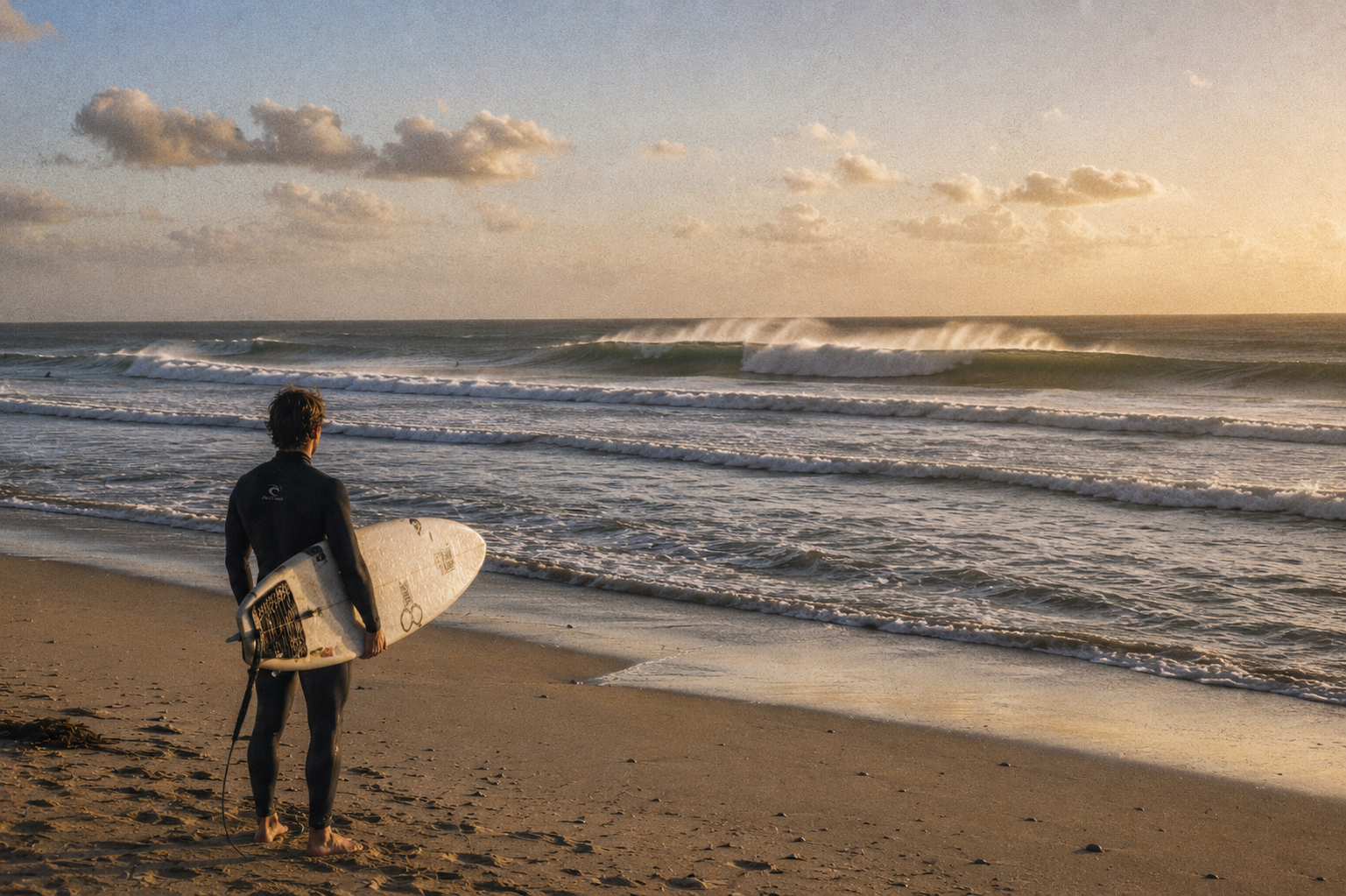
It’s just past six on a July morning and the backline at Blouberg is already stacked with lines that weren’t here in January. Bigger, more organized, more spaced out. A cold front pushed through overnight and the swell that follows is exactly what winter in Cape Town looks like: real groundswell, not the summer wind-chop most first-time surfers picture.
If you’re planning a surf trip for July or August, or you’re already at Surfers Lodge wondering whether this is still a “learn to surf” kind of week, this post is for you. It’s also for anyone who’s heard “winter swell” and assumed that means beginners should stay on land until December.
We’ve run beginner lessons through eight winters at Surfers Lodge, so here’s what’s actually true about surfing Blouberg this time of year, not the version you’ll find on a generic travel blog.
What Does “Winter Swell” Actually Mean at Blouberg?
Winter swell means bigger, more powerful groundswell generated by storm systems moving across the South Atlantic, arriving with more consistency and size than summer’s smaller, wind-driven waves. Where a typical summer day might bring 1 to 1.5 metre wind swell, winter regularly delivers 2 to 4 metre swell with longer periods, meaning more power per wave and a completely different rhythm in the water.
The wind shifts too. Summer’s reliable south-easter (locals call it the Cape Doctor) takes a back seat, and winter brings cold fronts with north-westerly and south-westerly winds instead. Water temperature drops from around 18-20°C in summer to 14-16°C in winter, which changes what you wear a lot more than it changes what you can do.
Is Blouberg Safe for Beginners in Winter?
Yes, but not on the biggest days, and that’s exactly why we don’t just throw beginners into whatever the ocean is doing. On a solid winter swell, our instructors move lessons to the sheltered inside sections where the waves have already broken down into manageable, rolling whitewater, which is still where every beginner learns regardless of season.
The read comes from experience: knowing which sandbanks hold their shape in a north-westerly, which corners stay protected when a front comes through, and which days are better spent doing beach basics before getting back in the water once the wind cleans up. This is the part a forecast website can’t tell you and a local instructor can.
What Changes for Beginner Lessons in Winter?
The main differences are wetsuit thickness, water temperature, and scheduling flexibility, not the actual skill of learning to surf. You’ll be in a 4/3 or 5/4 wetsuit instead of a summer 3/2, the water is noticeably colder for the first few minutes, and lessons often get shifted earlier or later in the day to catch the calmest wind window around a specific swell.
What you gain is a lineup with a fraction of the summer crowds. Fewer people paddling for the same wave, more one-on-one time with your instructor, and a much better view of the swell that put Cape Town on the surfing map in the first place.
Should You Still Book a Surf Trip to Cape Town in July or August?
Yes, if you want to watch and learn in genuine winter conditions and don’t mind sharing the lineup with almost no one. It’s not ideal only if your one goal is a guaranteed small, glassy beginner day every single day of your trip, but honestly, that’s rare in any season at Blouberg.
What winter actually offers is the real Cape Town surf experience: proper groundswell, quieter beaches, and instructors who have the time to properly work with you rather than juggling a packed peak-season schedule.
Frequently Asked Questions
Is winter a good time to learn to surf in Cape Town?
Yes. Beginner lessons still run through winter, just in the sheltered inside sections and with more flexible timing around the swell and wind. Smaller crowds are a real upside.
How cold is the water at Blouberg in winter?
Around 14 to 16°C, compared to 18 to 20°C in summer. A proper wetsuit makes it comfortable, not something to worry about.
Do I need a thicker wetsuit for winter surfing in Cape Town?
Yes, a 4/3mm or 5/4mm wetsuit is standard for winter, versus a 3/2mm in summer. We provide the right gear for the season with every lesson at Surfers Lodge.
Can total beginners handle big winter swells?
Not directly in the main peak, no. Instructors move beginner lessons to protected inside waves that stay small and manageable even when the outer banks are firing.
What’s the best time of day to surf Blouberg in winter?
Early morning, before the wind picks up later in the day. Our instructors check the forecast daily and schedule lessons around the cleanest window.
If you’re planning a winter surf trip, our Surfers Lodge page has everything you need to know about lessons, stays, and what to expect this time of year. Questions before you book? Just get in touch, we reply.
Related Posts
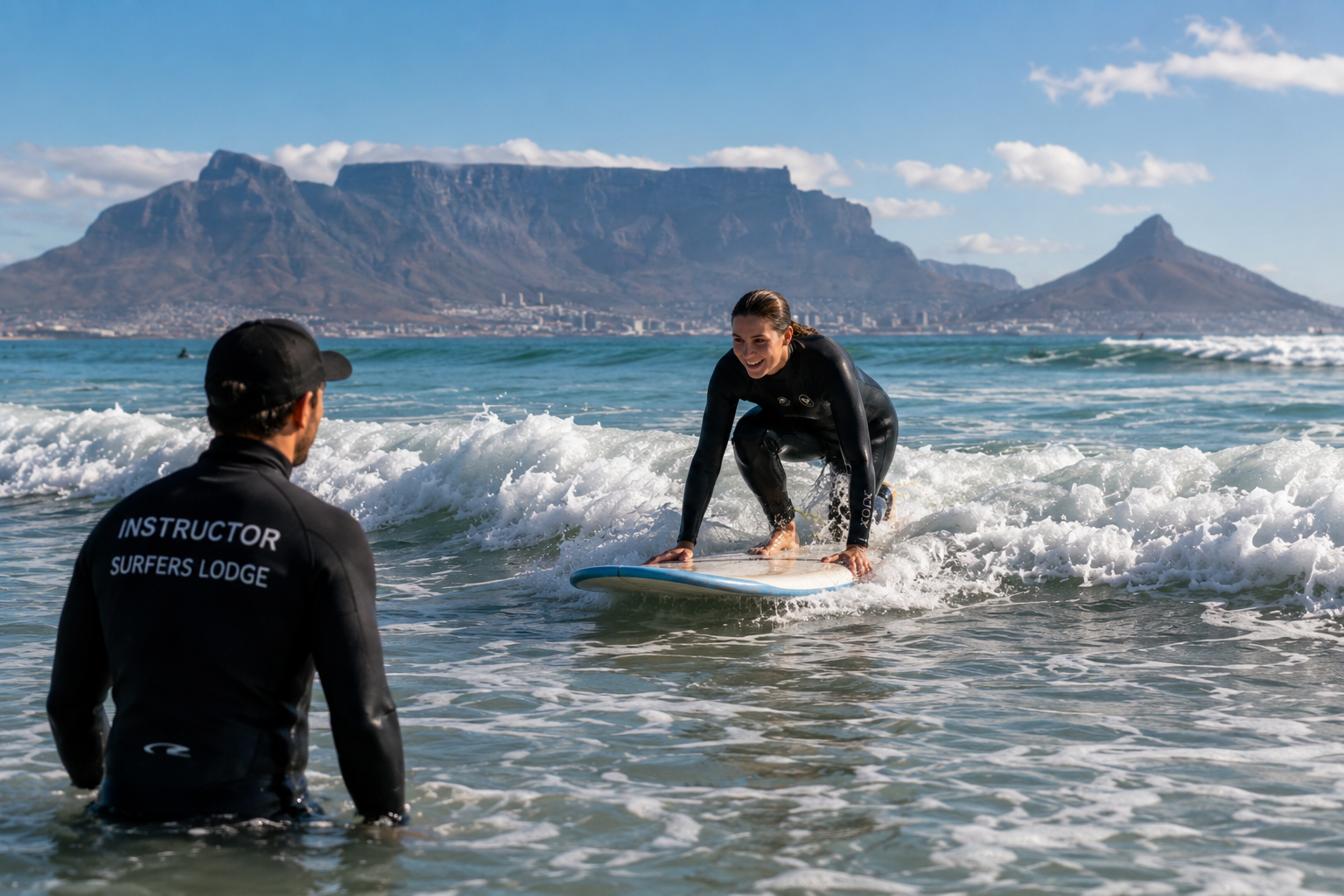
How Long Does It Really Take to Learn to Surf in Cape Town?
How long does it really take to learn to surf in Cape Town? Here's an honest,…
Pack Like a Pro: The Ultimate Guide to Prepping for Your Cape Town Surf Trip
Cape Town calling, but your boardbag's a mess? Fear not, surfer! This ultimate…